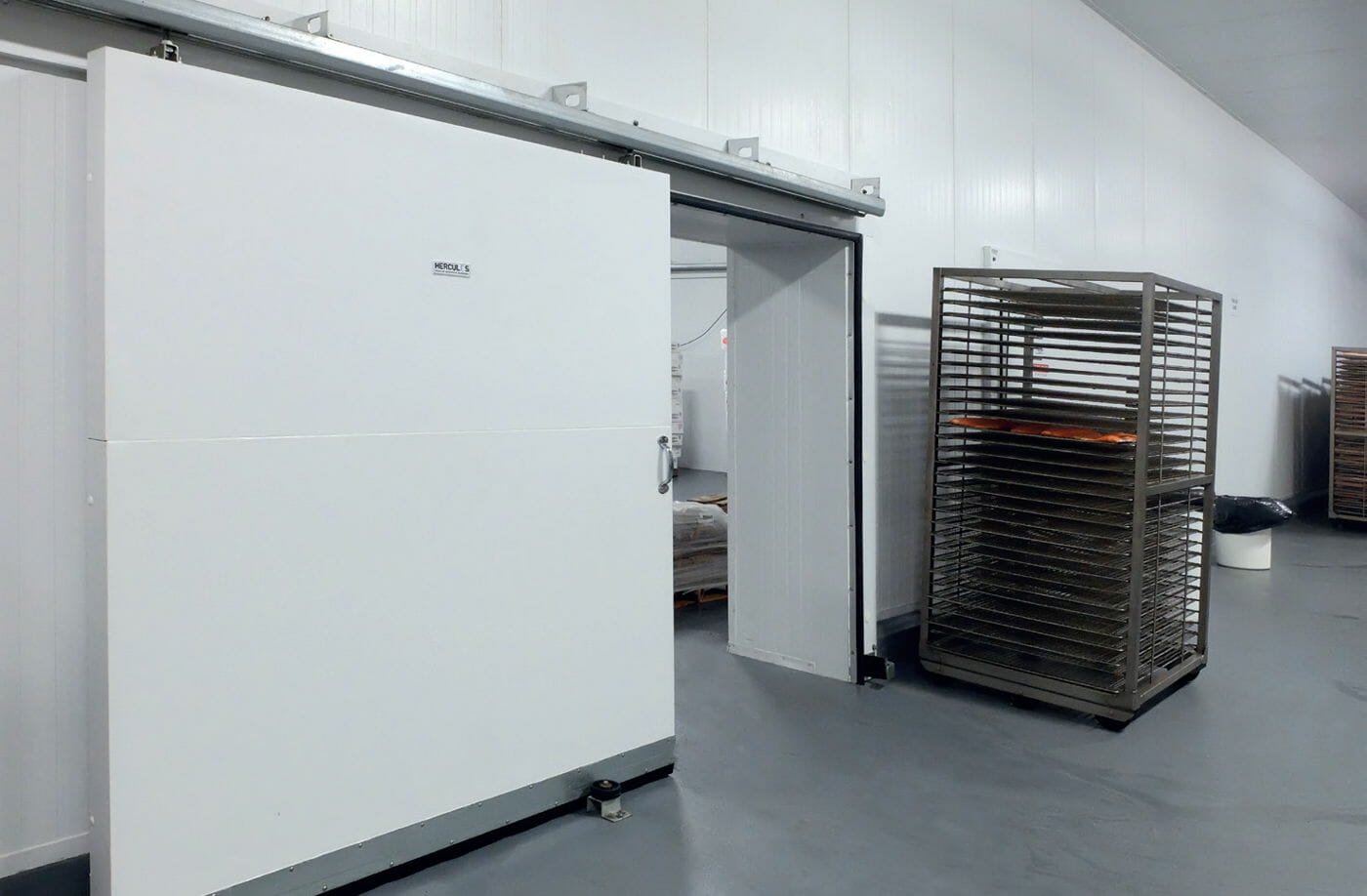
Why Cold-Storage Doors Fail
Heavy sliding freezer doors — typically hundreds of pounds, with some specialized installations exceeding 1,000 lb — commonly run on chain & sprocket drive trains because they’re robust and field-serviceable. The pain shows up elsewhere: jerky cold starts at –40 °C, nuisance trips during defrost, corrosion after sanitation cycles, and misalignment from constant impacts and thermal movement.
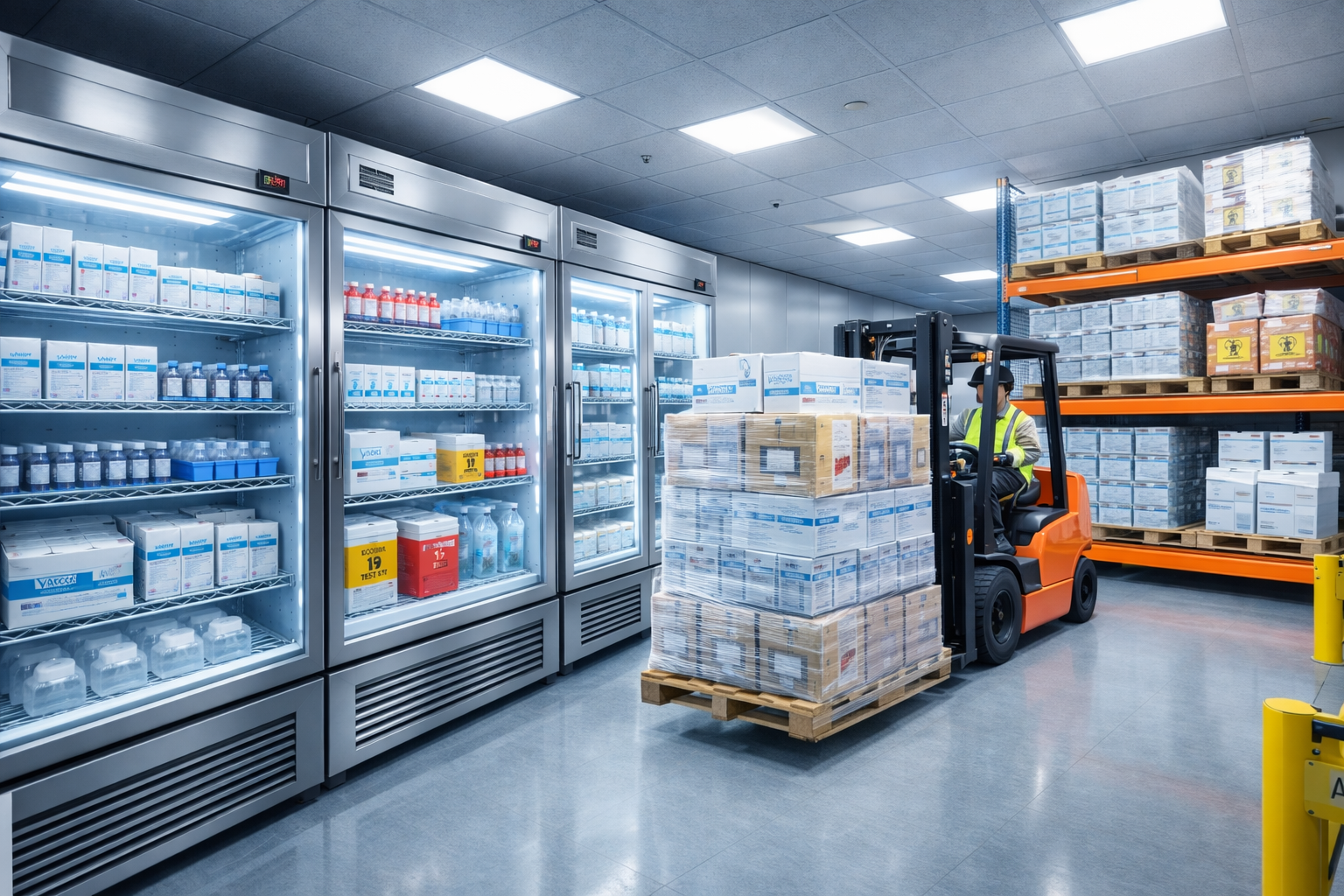
Pharmaceutical Cold Chain: Why Door Performance Matters
In pharmaceutical and life-science facilities, cold storage isn’t just about keeping products cold — it’s about protecting validated temperature ranges, documenting compliance, and reducing risk across the entire cold chain. Every second a sliding door sits open increases infiltration, humidity, frost, and temperature fluctuation — all of which can jeopardize sensitive inventory.
Temperature stability
Faster, predictable open/close cycles help maintain setpoints and reduce warm air infiltration.
Humidity & frost control
Reduced open-time means less moisture, less ice build-up, and fewer door alignment issues.
Compliance support
Consistent motion and fault reduction help minimize “events” that trigger investigations and rework.
Uptime & security
Cold rooms often have access control and monitoring. Reliable doors protect both inventory and workflow.
Common pharma / life-science use cases
- Vaccine and biologics storage (temperature-sensitive, high consequence).
- Clinical trial inventory rooms where chain-of-custody and stability matter.
- Refrigerated distribution centers and 3PL cold chain hubs.
- Clean manufacturing support areas where hygiene and wash-down routines are common.
What facilities teams care about (the practical stuff)
- Soft landings protect seals so doors close tight without slamming, reducing air leakage and ice formation.
- Torque on demand overcomes frost “stiction” without violent starts that loosen hardware over time.
- Quick reversal under load supports safety and prevents door damage during busy shifts.
- Wash-down ready enclosures and corrosion resistance reduce nuisance downtime after sanitation cycles.
Brushless Control That Plays Nice with Chains & Sprockets
We didn’t replace proven mechanics — we made them better. High-resolution commutation and adaptive torque profiles overcome frost stiction without slamming, protect seals with soft landings, and keep travel times consistent so open-time — and infiltration — drop.
- Cold-start profiles tuned for –40 °C environments.
- On-board diagnostics surface rising friction before failures.
- Retrofit-friendly brackets and compact enclosures minimize downtime.
- Sealed controls built for wash-down and chemical exposure.

See It Stop & Reverse Under Load
Safety isn’t theoretical. Watch a stress-test on a very heavy cold-storage sliding door detect an obstruction and reverse immediately. Most facilities run lighter doors; the same control scales to everyday loads.
Maintenance That Actually Saves Energy
Door performance is part of your refrigeration system. Faster, consistent cycles shorten open-time; soft landings protect seals. Together they reduce compressor load and stabilize product temps — especially important for pharma cold-chain spaces where temperature excursions can trigger investigations.
- Use sub-zero rated lubricants and corrosion protection on chains.
- Inspect idler & drive sprockets for hooked teeth; replace as sets.
- Re-verify guide alignment seasonally to fight thermal drift.
- Tune ramps as seals age; pull diagnostic logs quarterly.